Mechanoradicals: The Molecular Link Between Force and Healing
Reviewed by Robyn Midgley, Hand & Upper Extremity Therapist
For decades, hand therapists knew that gentle, sustained force healed stiff tissue better than forceful stretching — but not exactly why. A 2020 discovery in collagen finally gave us the molecular answer.
Mechanoradicals are free radicals produced when mechanical force breaks covalent bonds inside biological polymers — most importantly collagen, the structural protein of tendons, ligaments and joint capsules. While mechanoradicals were known in synthetic materials like rubber since the 1930s, their existence and biological relevance in proteins was only proven experimentally in 2020.
The 2020 discovery
A team led by Frauke Gräter at the Heidelberg Institute for Theoretical Studies showed that stretching collagen under physiological loads produces radicals through homolytic bond scission — the clean splitting of a chemical bond that leaves an unpaired electron on each side. Using electron-paramagnetic resonance spectroscopy on rat-tail tendon combined with molecular simulations, they demonstrated that:
- Radical signals rose reproducibly as force increased across the physiological range (~2–40 MPa).
- Radicals formed preferentially at collagen crosslinks — the sites where mechanical force concentrates.
- They migrated to and stabilised on aromatic residues as DOPA radicals, remaining detectable for hours.
Why this matters for treating the stiff hand
This mechanism gives a molecular rationale for one of the central principles of hand rehabilitation. The balance between beneficial collagen remodelling and harmful oxidative damage depends on the magnitude, duration and rate of loading:
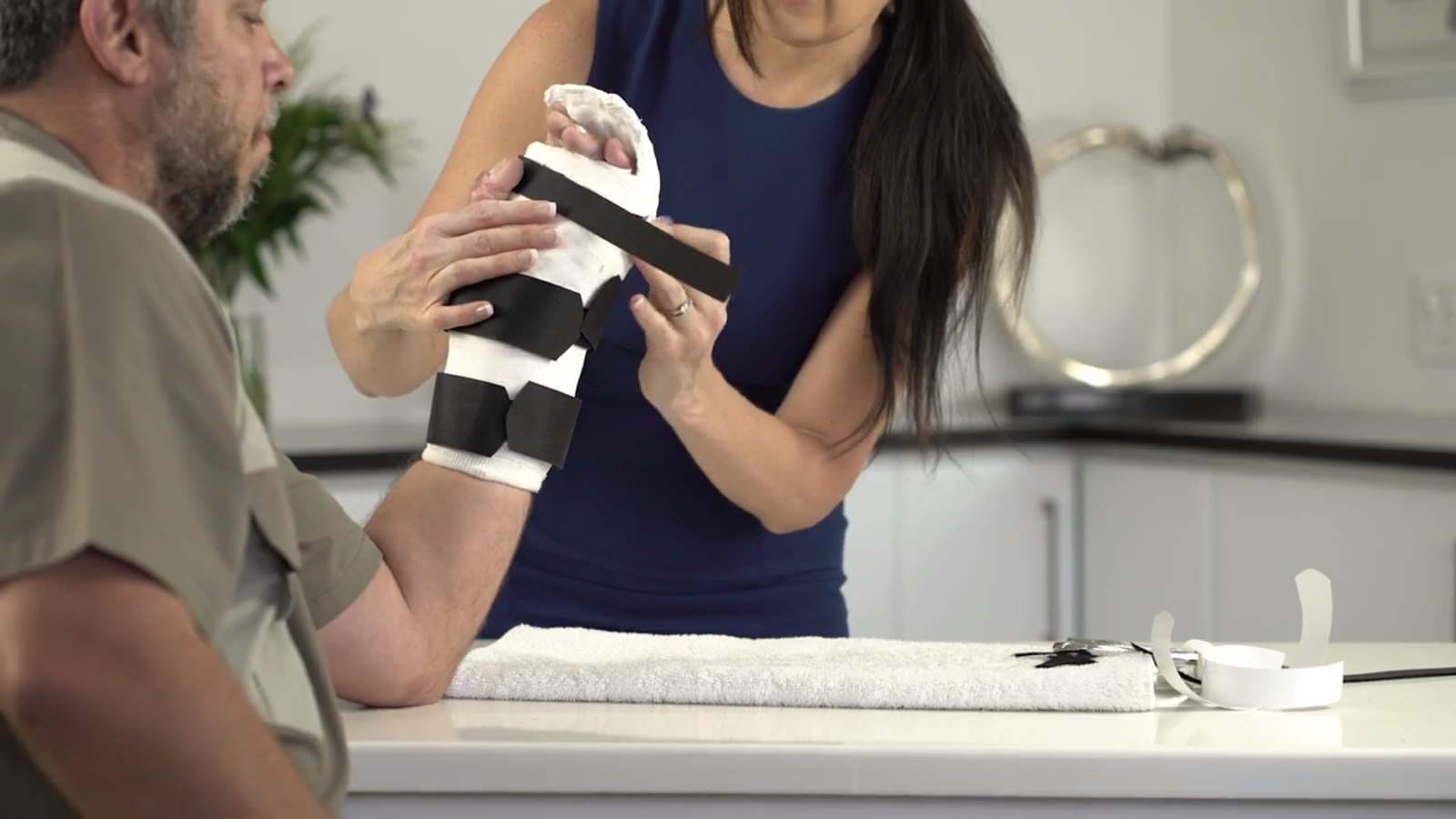
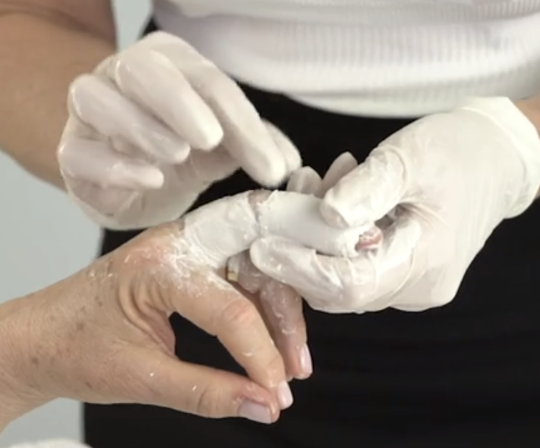
- Low-load, prolonged stress — as in serial casting and CMMS — drives adaptive remodelling: collagen realigns, crosslinking reduces, and the tissue responds elastically.
- Forceful, brief stretching risks exceeding the tissue's adaptive capacity, tipping the balance toward inflammation and re-injury.
In other words, the science now supports what careful clinicians have practised for years: respect the tissue, apply gentle sustained force, and let biology do the remodelling. This is the reasoning that underpins the CMMS approach to joint stiffness.
Reason through your next stiff-hand case
CMMSPro.AI is an AI clinical mentor that guides you through movement-pattern assessment, cast design and case progression — in 10 languages.
Frequently asked questions
What are mechanoradicals?
Free radicals created when mechanical force breaks covalent bonds in biological polymers such as collagen — first demonstrated experimentally in collagen in 2020.
Why do mechanoradicals matter for hand therapy?
They explain why gentle, sustained loading helps tissue remodel while excessive force generates oxidative stress — supporting low-load, prolonged stress techniques like serial casting and CMMS.
Key references
- Zapp C, Obarska-Kosinska A, Rennekamp B, et al. (2020). Mechanoradicals in tensed tendon collagen as a source of oxidative stress. Nature Communications 11:2315.
- Beyer MK, Clausen-Schaumann H (2005). Mechanochemistry: the mechanical activation of covalent bonds. Chemical Reviews 105(8):2921–48.
- Flowers KR, LaStayo P (1994). Effect of total end range time on improving passive range of motion. J Hand Ther 7(3):150–157.
This article is educational and does not replace individual clinical assessment. Treatment decisions should be made by a qualified hand therapist or clinician.