Contracture: Conservative Management Explained
Reviewed by Robyn Midgley, Hand & Upper Extremity Therapist
Most joint contractures can be improved without surgery — if the right approach is matched to the type of contracture and started before the tissue becomes fixed.
A contracture is a loss of joint range of motion caused by shortening or stiffening of the soft tissues around a joint — muscle, tendon, joint capsule, skin or fascia. Conservative (non-surgical) management is generally attempted first, and the choice of approach depends on the type of contracture (arthrogenic, myogenic or soft-tissue), its severity and duration, and the underlying cause.
Stretching and exercise
Passive stretching is widely prescribed, but the evidence for it is nuanced. A Cochrane review of stretch interventions for neurological contractures found that stretching applied for less than 30 minutes a day over less than three months does not produce clinically meaningful change. Active exercise and functional activities performed with the tissue in a lengthened position often produce better outcomes than passive stretching alone.
Orthotic devices
Static splints hold a joint's position and can slow contracture progression. Dynamic orthoses apply gentle elastic traction; static-progressive orthoses use inelastic components adjusted incrementally to hold the joint at end range for prolonged periods. The key variable across all of them is total end-range time — the cumulative time the tissue spends at its maximum tolerable length.
Serial casting
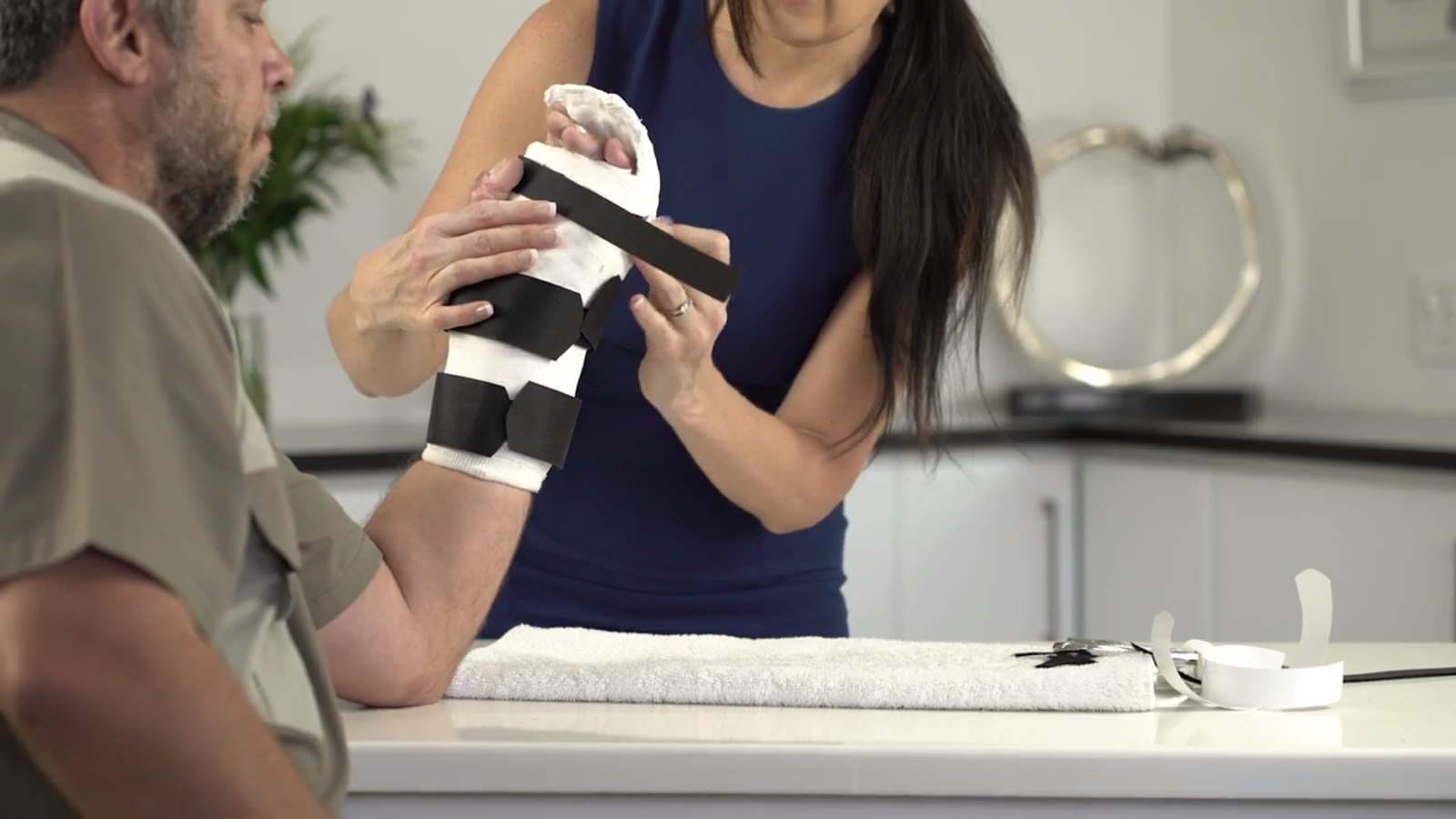
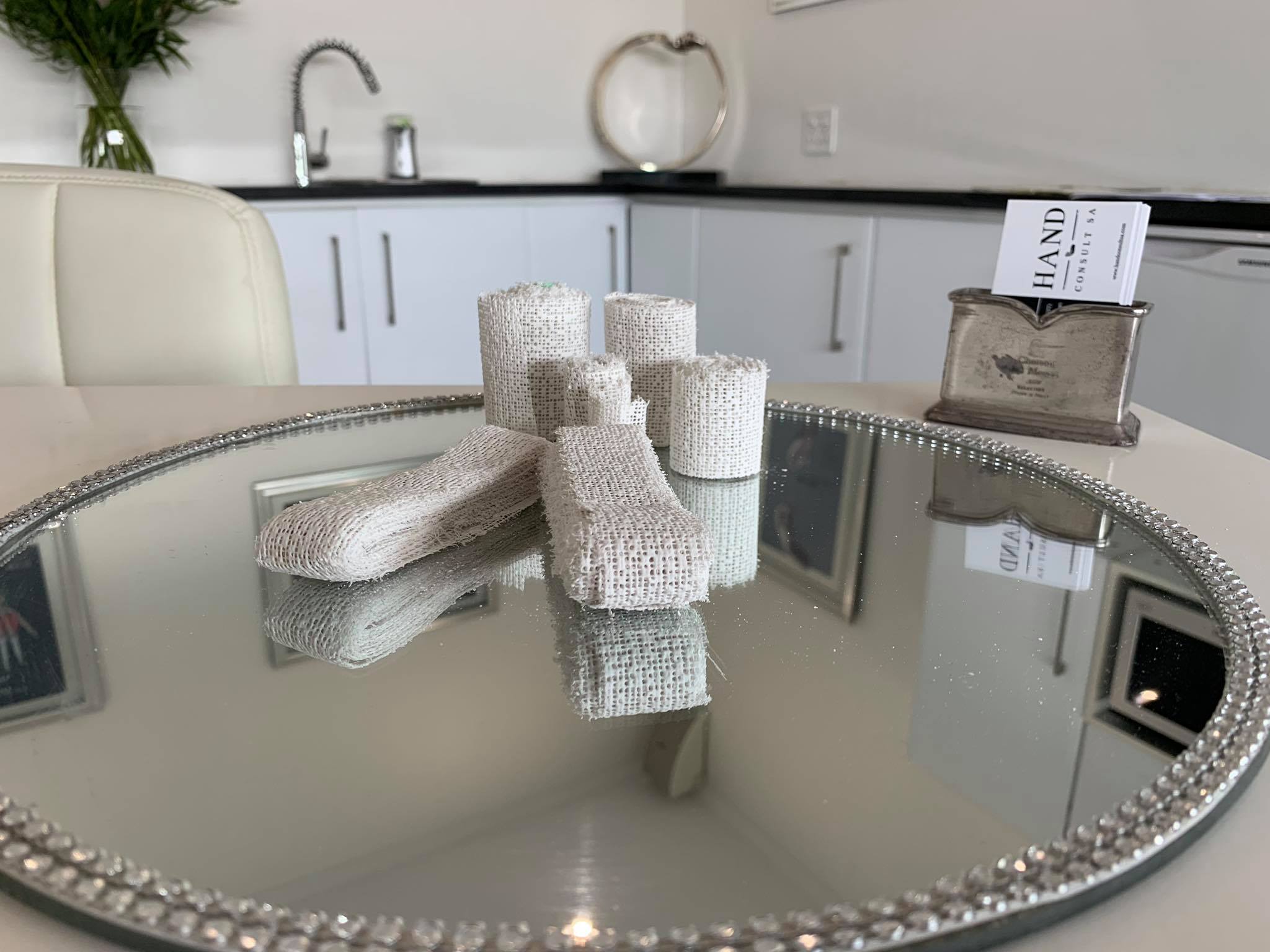
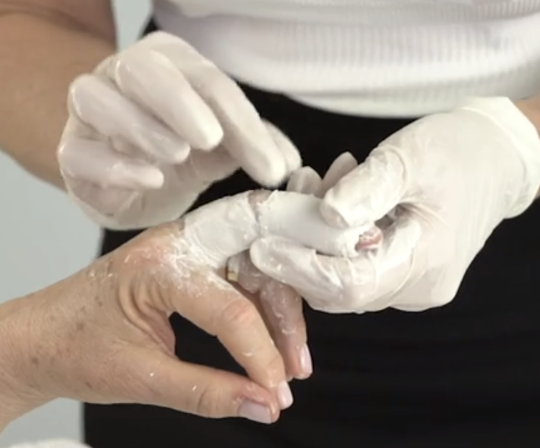
Serial casting uses circumferential casts, usually plaster of Paris, to hold a contracted joint at its maximum comfortable range for extended periods, changing the cast every few days to progressively reposition the joint. Read more in our guide to therapeutic casting.
Casting motion to mobilise stiffness (CMMS)
CMMS, developed by Judy Colditz, takes a different approach to the contracted and poorly-patterned hand. Rather than positioning the stiff joint at end range, it immobilises the proximal joints in a therapeutic position while the patient performs active motion at the distal joints. This addresses both the structural and the neuromotor components of stiffness at once.
Botulinum toxin
For contractures driven by spasticity — after stroke, cerebral palsy or traumatic brain injury — botulinum toxin can temporarily reduce muscle overactivity, opening a therapeutic window in which stretching and casting work better.
Reason through your next stiff-hand case
CMMSPro.AI is an AI clinical mentor that guides you through movement-pattern assessment, cast design and case progression — in 10 languages.
Frequently asked questions
What is a joint contracture?
A permanent or semi-permanent loss of range of motion caused by shortening or stiffening of the soft tissues around a joint — muscle, tendon, capsule, skin or fascia.
Can contractures be treated without surgery?
Usually, yes. Conservative options include active exercise, orthoses, serial casting, CMMS, botulinum toxin for spasticity, and electrical stimulation — matched to the type, severity, duration and cause.
What is total end-range time?
The cumulative time a contracted tissue is held at its maximum tolerable length. Longer sustained positioning produces greater, more lasting gains than intermittent force.
Key references
- Katalinic OM, et al. Stretch for the treatment and prevention of contractures. Cochrane Database Syst Rev.
- Flowers KR, LaStayo P (1994). Effect of total end range time on improving passive range of motion. J Hand Ther 7(3):150–157.
- Ugurlu Ü, Özdoğan H (2016). Serial casting for PIP joint flexion contractures. J Hand Ther 29(1):41–50.
- Colditz JC (2002). Plaster of Paris: the forgotten hand splinting material. J Hand Ther 15(2):144–57.
This article is educational and does not replace individual clinical assessment. Treatment decisions should be made by a qualified hand therapist or clinician.