Joint Stiffness: Causes, Stages and How It's Treated
Reviewed by Robyn Midgley, Hand & Upper Extremity Therapist
Joint stiffness is one of the most common — and most frustrating — problems in hand rehabilitation. Understanding how it develops explains why some treatments work and others don't, and why timing matters so much.
Joint stiffness can mean three related things: pain on moving a joint, the sensation that a joint no longer moves as far as it should, or a measurable loss of range of motion found on examination. In the hand, all three often appear together, and the earlier they are addressed the better the outcome.
How joint stiffness develops after injury
Following trauma or surgery, stiffness develops through a predictable sequence of overlapping biological stages. Recognising which stage a patient is in helps determine the right intervention:
- Bleeding — damaged vessels bleed into the joint or surrounding soft tissue, triggering inflammation.
- Oedema — fluid accumulates and restricts movement. If it lingers, it becomes a scaffold for scar tissue.
- Granulation tissue — fibroblasts and capillaries arrive to repair the injury, but excess proliferation creates adhesions.
- Fibrosis — overproduction of collagen forms thick, non-pliable scar that can permanently limit motion and lead to contracture.
Why timing matters: the window during oedema and early granulation is where intervention changes the trajectory. Once dense fibrosis sets in, motion is far harder to recover — which is why swift diagnosis and treatment protect the functional outcome.
The collagen science behind stiffness
At a molecular level, stiffness reflects changes in collagen, the main structural protein of tendons, ligaments and joint capsules. Collagen is constantly under mechanical load, and research published in 2020 showed that this loading produces free radicals — mechanoradicals — through breakage of bonds at collagen crosslinks. These convert to reactive oxygen species that may contribute to pain, inflammation and arthritis.
This matters clinically: the balance between helpful tissue remodelling and harmful oxidative damage depends on how much force is applied, and for how long. It provides a molecular reason for something hand therapists have long observed — gentle, sustained positioning outperforms brief, forceful stretching.
The role of maladaptive movement patterns
Stiffness isn't only a tissue problem. After injury or immobilisation, the brain reorganises how it moves the hand — sometimes within as little as 12 hours. It begins initiating movement from joints that still move freely rather than the stiff ones, creating a compensatory pattern that becomes self-reinforcing. These neuroplastic changes can persist even after the original tissue damage has healed, which is why the most effective treatments address both the tissue and the movement pattern.
How joint stiffness is treated
Exercise and mobilisation
Active motion is the foundation of treatment — it engages the nervous system and drives motor learning alongside tissue remodelling. Evidence suggests passive stretching applied for less than 30 minutes a day over less than three months rarely produces meaningful lasting change.
Splinting and orthoses
Static splints hold position; dynamic orthoses apply gentle elastic traction; static-progressive splints hold the joint at end range with incrementally adjusted, inelastic components to achieve low-load prolonged stress.
Serial casting
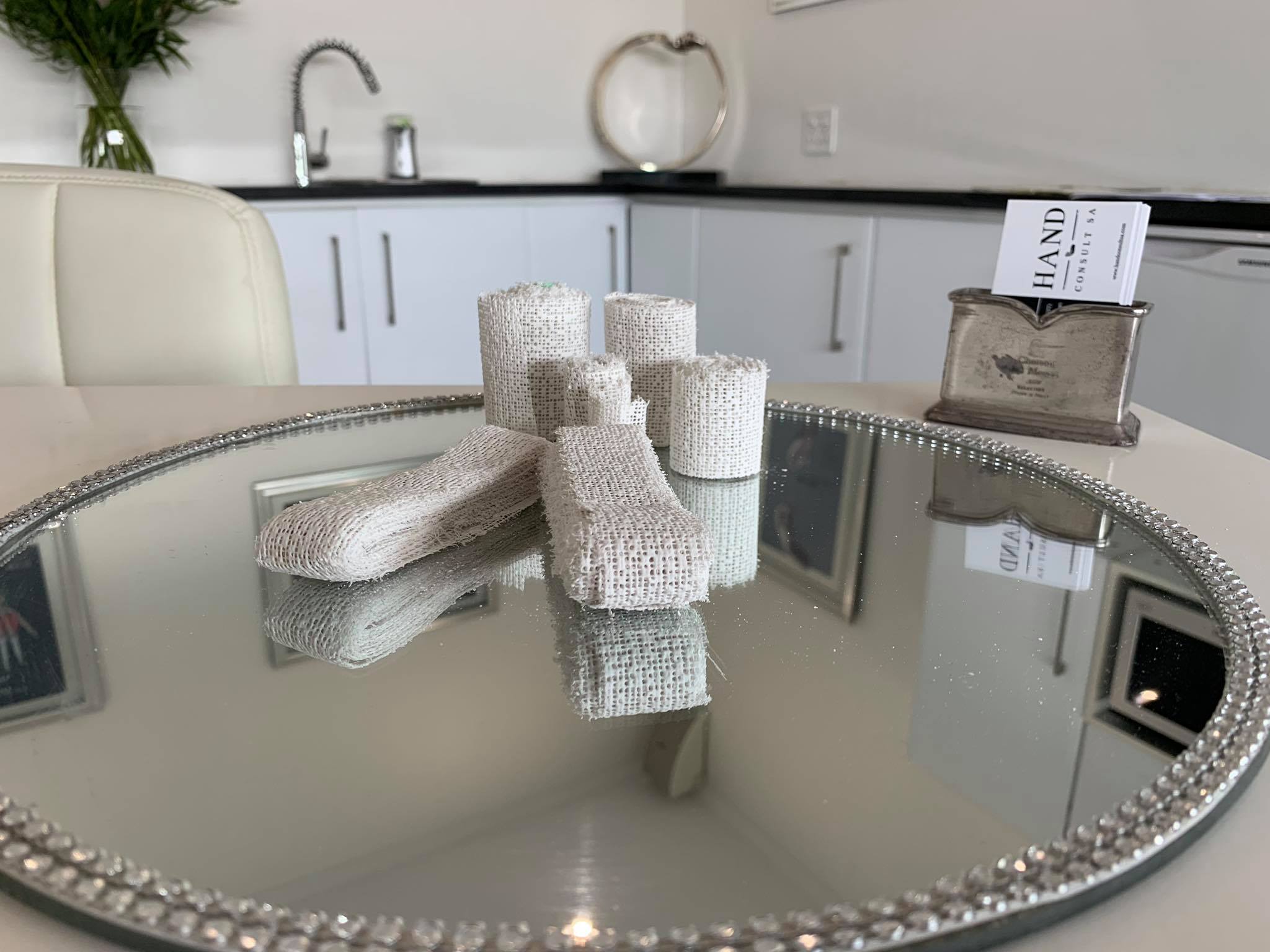
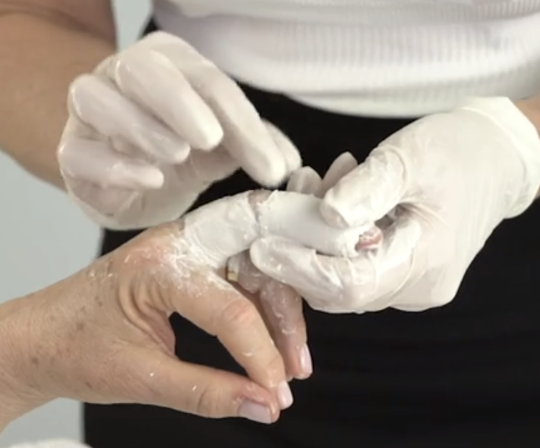
First developed by Paul Brand for leprosy-related contractures, serial casting uses circumferential casts changed at intervals to progressively reposition a joint. It is especially effective for small-joint contractures where splints have failed.
Casting motion to mobilise stiffness (CMMS)
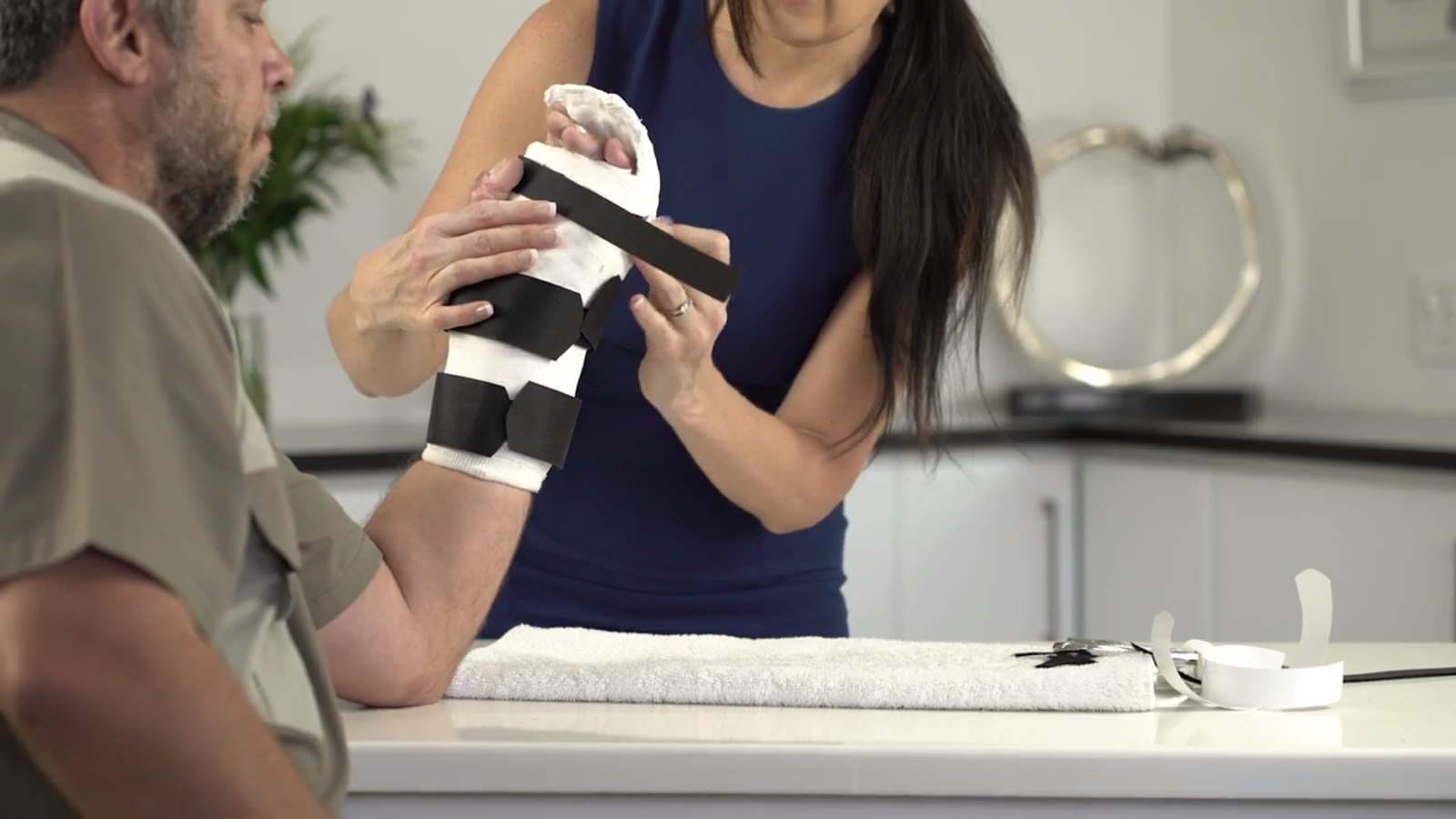
Developed by Judy Colditz, CMMS differs from serial casting: a non-removable cast holds the proximal joints in a therapeutic position while the patient performs active motion through the distal joints only. It addresses poor movement patterning, fibrotic oedema, tissue tightness and contracture simultaneously, and is recognised by the American Society of Hand Therapists, which offers an accredited course on the technique.
Reason through your next stiff-hand case
CMMSPro.AI is an AI clinical mentor that guides you through movement-pattern assessment, cast design and case progression — in 10 languages.
Frequently asked questions
What causes joint stiffness?
Trauma and surgery, inflammatory arthritis, neurological conditions causing spasticity, fibrotic conditions like Dupuytren's contracture, and prolonged immobilisation. After injury it develops through bleeding, oedema, granulation and fibrosis.
How is joint stiffness in the hand treated?
Through active and passive motion, splinting, serial casting and the CMMS technique. Low-load, prolonged positioning is more effective than brief forceful stretching.
Why is gentle sustained stretching better than forceful stretching?
Sustained low-load tension realigns collagen and produces permanent remodelling, while forceful stretching can trigger inflammation and mechanoradical-mediated oxidative damage.
Key references
- Zapp C, et al. (2020). Mechanoradicals in tensed tendon collagen as a source of oxidative stress. Nature Communications 11:2315.
- Colditz JC (2002). Plaster of Paris: the forgotten hand splinting material. J Hand Ther 15(2):144–57.
- Flowers KR, LaStayo P (1994). Effect of total end range time on improving passive range of motion. J Hand Ther 7(3):150–157.
- Ugurlu Ü, Özdoğan H (2016). Serial casting for PIP joint flexion contractures. J Hand Ther 29(1):41–50.
- Midgley R (2016). CMMS technique for rehabilitation after crush and degloving injury. J Hand Ther 29(3):323–33.
This article is educational and does not replace individual clinical assessment. Treatment decisions should be made by a qualified hand therapist or clinician.